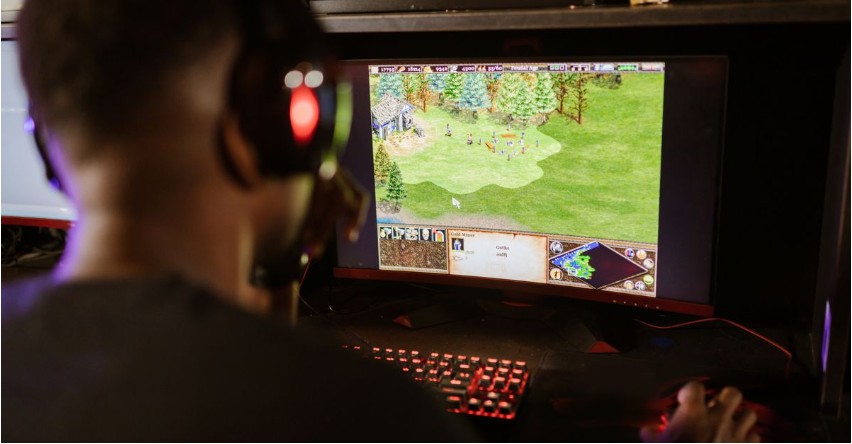
Have you noticed how online gaming has changed the way people hang out?
What used to be a solo pastime or a way to pass time has become a social space with real habits, real groups, and real conversations. People do not just log in to play anymore.
They log in to catch up, coordinate, joke around, and stay connected across distances that used to make regular socializing difficult.
Social Play Is No Longer Limited By Location
The biggest shift is simple: people no longer need to be in the same room to play together.
Online sbobet games let friends, family members, classmates, and even strangers share the same activity from different cities or countries. That changes the idea of “hanging out.” Instead of planning around travel or schedules as much, people can jump into a match, a co-op mission, or a voice chat and spend time together in a low-pressure setting.
Communication Has Become Part Of The Play
Modern online games are built around talking, reacting, and coordinating in real time.
In many games, players have to share information quickly, make decisions together, and adjust to each other’s styles. That means social skills are not separate from the activity. They are part of it. People learn to read tone, timing, and teamwork under pressure, which is a very different type of social interaction from texting or scrolling through feeds.
It also makes space for lighter forms of communication. Humor, sarcasm, short check-ins, and running inside jokes all become part of the experience. A lot of friendships are built less on formal conversation and more on repeated, low-stakes exchanges that feel natural because the game keeps everyone moving.
Some players even treat familiar spaces and communities almost like a social hub, and that is part of why names like tangandewa resmi come up in conversations about online play. The point is not the label itself, but the fact that people often return to the same places for company as much as for the activity.
Shared Goals Create Faster Connections
Online gaming often speeds up social bonding because people work toward the same outcome.
When players have to coordinate, protect each other, or build something together, they get a fast sense of who communicates well and who follows through. That shared effort creates trust quickly. It also gives people a reason to keep interacting, since progress often depends on cooperation rather than one person carrying everything.
Even competitive play has a social side. Friendly rivalry, rematches, and post-match talk can be just as important as winning. In that way, a game becomes more than a contest. It becomes a repeatable social routine that gives people a reason to show up again.
Identity And Self-Expression Are Part Of The Experience
Online gaming also rewrites social play by giving people more control over how they present themselves.
Players can choose avatars, usernames, styles, and roles that reflect parts of their personality they may not show elsewhere. For some people, that freedom makes social interaction easier.
It can lower pressure and create room for confidence. For others, it is simply a fun way to try out different identities while still staying connected to real people.
Online Spaces Are Changing What Friendship Looks Like
Friendship in gaming often looks different from friendship in other settings, and that difference is important.
Some gaming friendships are intense but brief. Others last for years. Some people talk daily, while others only reconnect during special events or new releases. There is no single pattern, and that flexibility is part of the appeal. Online gaming makes room for looser connections that still feel real.
It also changes how people maintain relationships. You do not always need a long phone call or a scheduled meet-up to stay in touch. Sometimes a short session is enough to say, “I am still here.”
In that sense, online gaming has rewritten social play by making connections more frequent, more casual, and more adaptable. It gives people a place to laugh, compete, cooperate, and be recognized by others without needing a formal setting.
Final Thoughts
Online gaming matters because it shows how social life keeps changing with technology, but not coldly or mechanically. People still want the same basic things they have always wanted from social play: attention, trust, shared fun, and a sense of belonging. Online gaming just gives them new tools and new spaces to get those things. It mixes communication, identity, competition, and friendship into one activity that can be casual one day and deeply social the next.